- Home
- Galleries
- * GALLERY 1 * Early explorations with graphicacy
- Early attachment of meanings to graphical marks
Early attachment of meanings to graphical marks
Meanings and syntax
Underpinned by Athey (2007), Kress (1997), Matthews (1999) and Machón (2013), and according
to Lancaster (e.g., 2007), young children's early drawings are intentional and purposeful, showing that - rather than interpreting them in terms of a stage theory – we should appreciate that very young children understand that marks and individual signs can be meaningful. Children imbue their marks and early drawings with their meanings, of objects, people and experiences. Kress warns that "we have to look at these childish productions with entirely new eyes" (1997, p. 36).
The following examples reveal evidence of 'grammaticisation' (e.g., Langacker, 2000), indicating some regularity in respect of the marks they chose, and the way in which they arranged their marks on a page. Lancaster's work suggests that the examples below show that "the children are starting to use some of the syntactic principles that underlie writing systems earlier than might have been thought" (p. 149). It is the social meanings (e.g., a cartoon watched on television; going to the swimming pool; a trip to the beach with mum and friends, playing ball), which Kress and van Leeuwen (2001), suggest "are the starting point and driving force behind the organizational structures of signs and texts of all kinds" (Lancaster, p. 142).
The ghosts go swimming
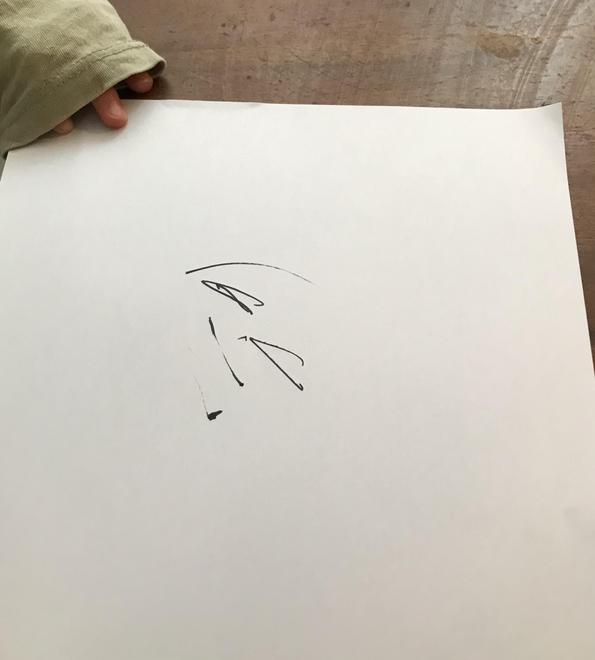
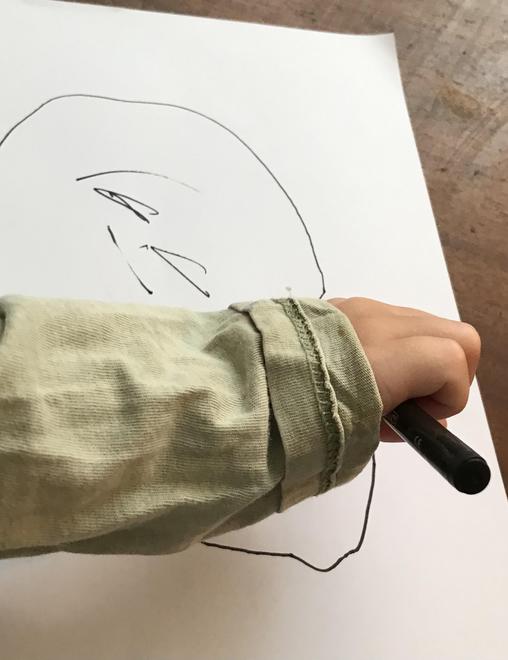
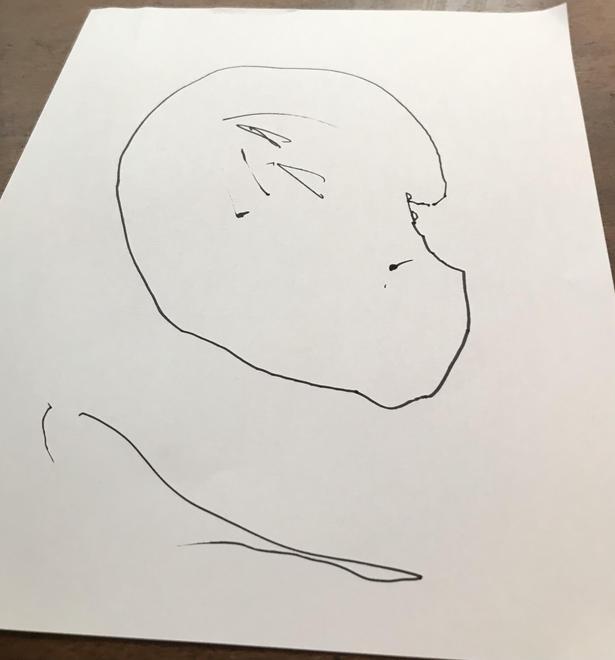
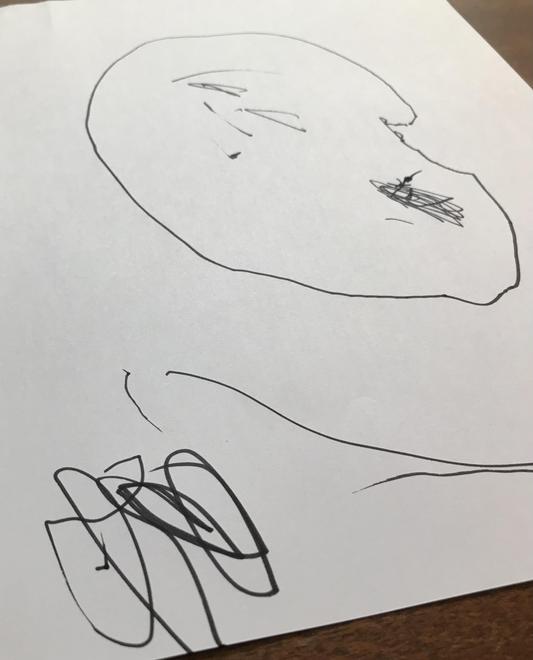
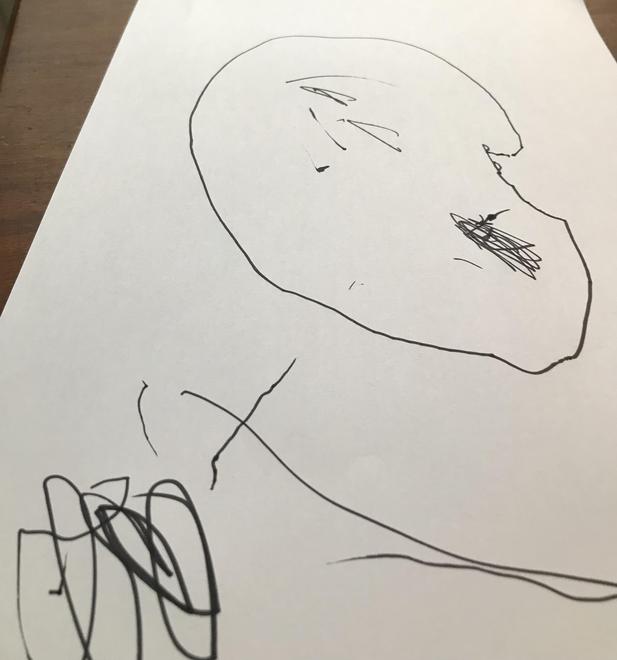
The following examples are from Max (2 years, 11 months). Max's marks denoting the ghosts and his home are indicatory of both. As he draws, his imagined 'story' unfolds. By drawing a circle, he signifies the pool around the ghosts, positioning them in the water. Max's marks signifying his home show he considered the location of his home in relation to the pool, reflecting on the route he walked with his mum to the pool from his house, using lines to indicate the direction.
 |
 |
 |
|
1. Max named the first marks he drew as "Ghosts".
|
2. Drawing a circle around his marks, he explained it was a "swimming pool – the ghosts are swimming." |
3. Max then drew a long, looped line, and laughing cheekily, said it was "a smelly fart"!
|
 |
 |
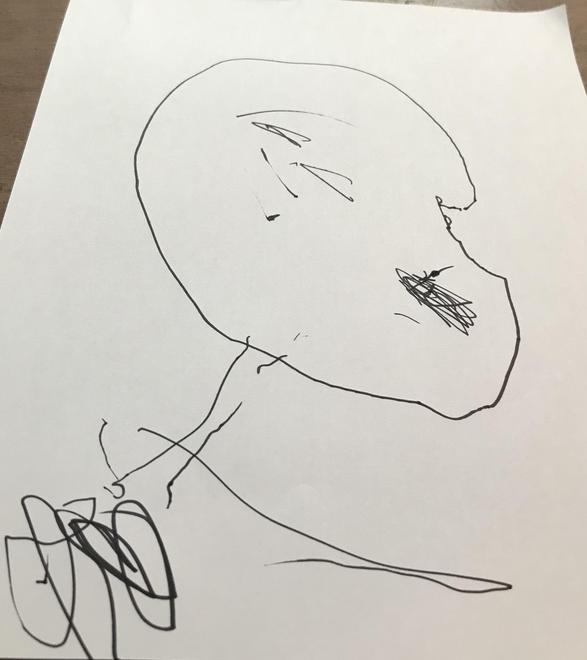 |
| 4. Next, he drew a tiny mark in the left-hand corner as "home", covering it with scribble marks. | 5. Max then drew a vertical line that crossed his earlier horizontal line, saying "to the swimming pool." |
6. Finally, he extended the short vertical line and added a second one next to it, so that it linked his home and the pool. |
Max lives just a few minutes' walk to the swimming pool, so he's very familiar with the route from his house. Max's mum explained that his interest in ghosts seemed to have originated from an animated film called "Booba" he'd watched, one episode featuring a funny ghost.
References
Athey, C. (2007). Extending thought in young children, 2nd ed. Paul Chapman.
Kress, G. (1997). Before writing: Re-thinking the paths to literacy. Routledge.
Kress, G. & van Leeuwen, T. (2001) Multimodal Discourse. Arnold.
Lancaster, L. (2007). Representing the ways of the world: How children under three start to use syntax in graphic signs. Journal of Early Childhood Literacy 7(2), 123-154.
Langacker, R. (2008). Cognitive Grammar.: A basic introduction. Oxford University
Machón, A. (2013). Children's drawings: The genesis and nature of graphic representations. Fibulas.
Matthews, J. (1999). The art of childhood and adolescence: The construction of meaning. Farmer.