Children's mathematics
Mathematics matters 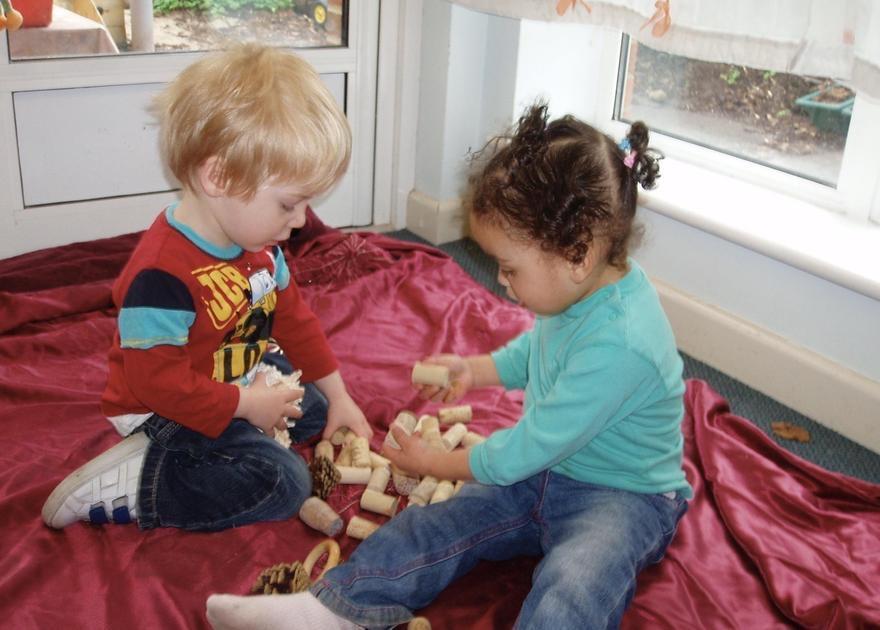
Mathematics is an important aspect of science, technology, art and many other school subjects, and influences every aspect of society, including economic, social, business, scientific, agricultural, environmental, medical, industrial and technological (Fatima, 2014). In England, it has been a significant government focus since the National Numeracy Strategy was introduced in 1999.
What is 'Children's Mathematics' and why is it important?
Children's mathematics refers to children's own thinking about aspects of mathematics, and is often triggered by their own enquiries. Babies self-enquire about the mathematical phenomena which are evident in their worlds, as they explore space and shape, beginning with feel, size and taste. As children grow and develop, they retain this drive, their natural curiosity leading them to experiment. They learn best when they explore in their own ways, the things in which they are interested (Athey, 1990). Young children have a huge capacity to think and rethink their own lines of enquiry and ways of communicating, acting mathematically, through play and self-initiated exploration, talk and graphics. Children's Mathematical Graphics are an important aspect of Children's Mathematics.
Too often, mathematics is not well understood and children leave school with a dislike of the subject, have a poor understanding of it and admit that they are not good at maths. Children's Mathematics is important because it is their own and they understand their mathematics. If we give children ownership of their mathematics by authentically listening to and encouraging their mathematical thinking, then the power of mathematics will be returned to them.
Children's Mathematical Graphics
Children’s Mathematical Graphics is the term we originated to describe the marks, signs and symbols that children freely (and often spontaneously) choose to use to communicate their mathematical thinking. Our use of the word graphics includes scribbles, lines, dots, drawings, tally marks, crosses, ticks, children’s early (emergent) writing, and invented and standard abstract mathematical symbols.
In 1986, Martin Hughes's seminal work on the difficulties young children experience in learning mathematics was published. Hughes recommended that teachers "find out about children's mathematical background"; "build on children's own strategies" and "respect children's invented symbolism" (1986. pp. 176-177), pointing to what we believed could be an emergent mathematics approach. These recommendations are at the heart of Children's Mathematical Graphics.
Mathematics education in early childhood needs to fucus on children's meaning-making through their graphical signs and representations – which are cognitive tools through which children develop understanding, rather than emphasising only correct answers, the correct writing of numerals and school readiness issues (Quane, 2025). Young children's signs and representations that they choose to use to communicate their mathematical thinking, are semiotic and multimodal, and highly valuable in their developing understanding of mathematics (Sagran., Sagran & Gilder, 2026; Worthington & van Oers, 2017).
References
Athey, C. (2007). Extending Thought in Young Children. Paul Chapman.
Fatima, R. (2014). The role of mathematics in the development of society. National meet on celebration of the National Year of Mathematics – 2012.
Hughes, M. (1986). Children and Number: Difficulties in Learning Mathematics. Basil Blackwell.
Quane, K. (2025). The confluence of attitudes towards mathematics and pedagogical practice. Mathematics Education Research Journal, 37, 369-398.
Sagran, S. F.., Sagran, S. F., & Gildner, L. (2026). Jurnal Pendidikan Matematika, 12 (1), 84-98).
Worthington, M., & van Oers, B. (2017). Children’s social literacies: Meaning making and the emergence of graphical signs and texts in pretence. Journal of Early Childhood Literacy, 17(2), 147-175.