Counting continuously
We use the term counting continuously to describe this early stage of children’s early representations of calculation strategies – both addition and subtraction. Though not directly taught, Hughes (1986, p.35) suggests that it is self-taught.
|
|
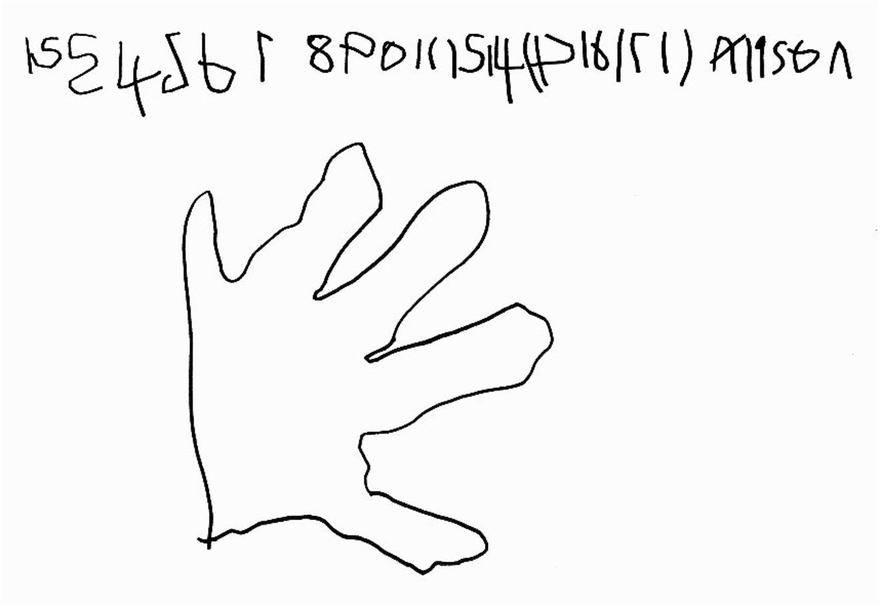
The breakfast cafeThe children were preparing for a 'breakfast cafe' in their classroom. Alsion (5 years, 1 month) was counting the children in her group, and also each child's soft toy, in order to work out the total number who would be eating. This number would then be added to the others in her class, with their toys. Alison represented her count as a string of numerals. When self-checking (a mature decision), she found that she had written too many numbers, and drew brackets round those she did not need (15, 16 and 17). The hand she drew may have represented the action of adding, although in this instance we cannot be sure.
|
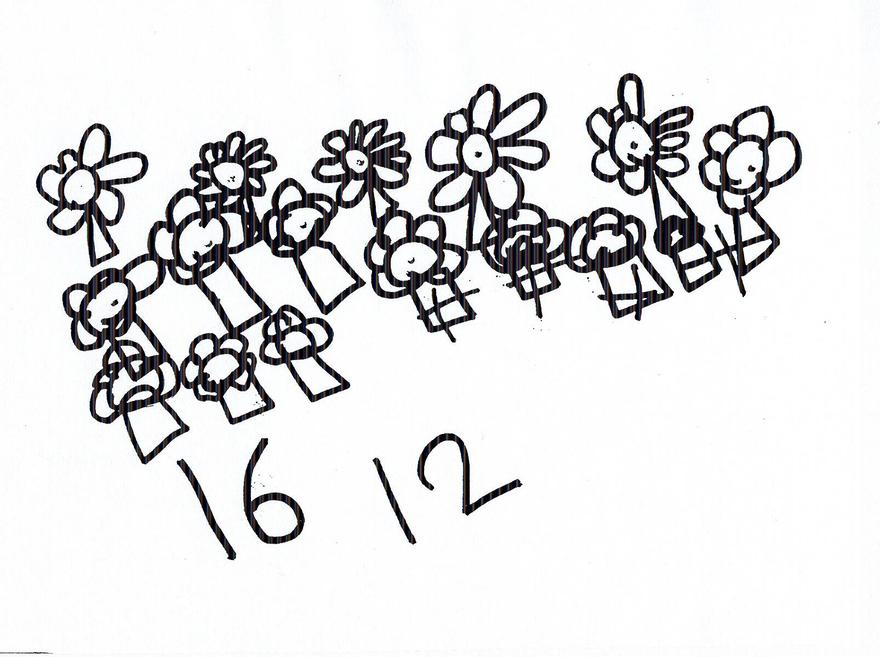
Selling flowersAlison, (4 years,11 months) was playing in the class's pretend play garden centre, and was serving a customer who had just asked for four flowers. Alison rapidly drew the 16 flowers in the pot, then wrote '16', followed by '12' as the total number of flowers that remained. She hadn’t been asked to draw or write anything, but appeared to find this helpful.
|
|
|
|
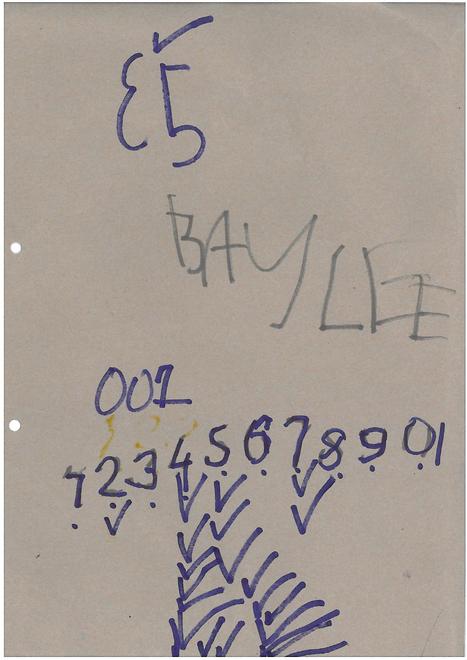
'How old are you?' Baylee just had her 5th birthday, and wanted to find out the ages of When she showed her teachers, she pointed to the ticks beneath
|